
What this service is
Plowing is the part everyone pictures, and it’s the part that’s easiest to do badly. A fast, careless push clears the middle of the lot, leaves ridges of snow across your stalls, and leaves ridges where a rigid blade skipped over uneven pavement.
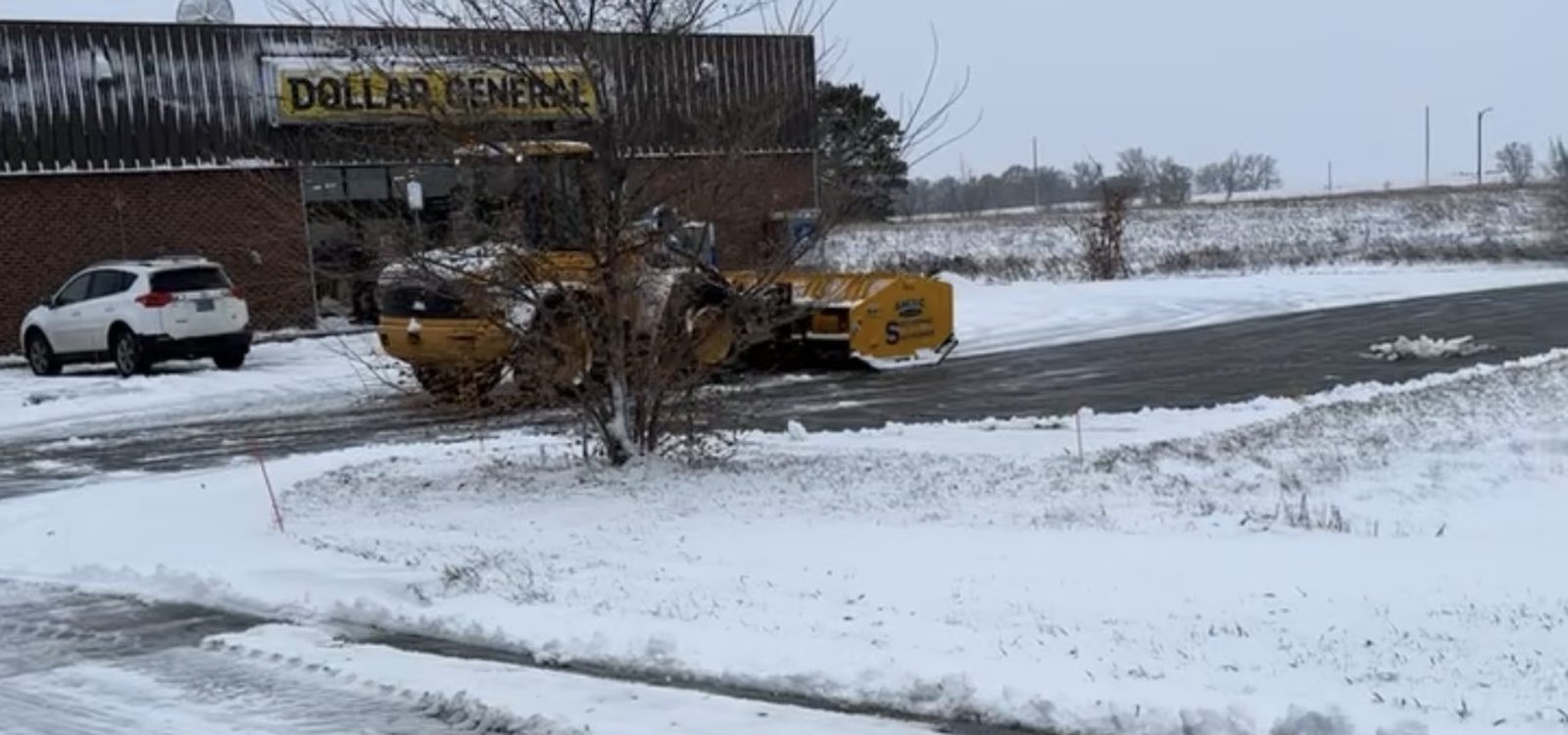
We run sectional snow pushers. Instead of one rigid blade, the pushing edge is split into sections that move independently and follow the contour of the pavement underneath. On a lot that isn’t perfectly flat (which is every lot) that means the whole width scrapes clean rather than the high spots scraping and the low spots keeping their snow. Most small contractors run straight blades or box plows, and the difference shows up in what’s left behind.
The goal is a lot that’s actually finished: stalls usable, drive lanes wide, no piles left where they’ll block sightlines or freeze again into a ridge across your entrance.
Our process
We map your lot before the season. Where snow gets stacked, where it can’t go, which curbs and islands are hidden once there’s cover, where the drainage runs. Doing this in daylight in October beats guessing in the dark in January.
We dispatch on your trigger. You choose a one-inch or two-inch trigger depth when the contract is written, and that’s what sends us out. Zero-tolerance service (clearing any time it snows) is available if your property needs it.
We push to the mapped spots where we pile the snow. Consistent direction every visit, so snow ends up in the same place and doesn’t creep across the lot over the season.
We clear the edges and corners. Loading zones, dumpster access, and the corners that a straight push always misses.
We finish before your opening hours. For contracted properties, that’s the commitment. The lot is done before your day starts.
What affects the price
- Total area and layout - an open lot plows faster per square foot than a lot broken up by islands, curbs and planters
- Where snow can be stacked - if there’s nowhere on site, snow has to be relocated or hauled, which is a separate cost
- Obstacles - light poles, bollards, cart corrals, drive-throughs and loading docks all slow a push down
- Your trigger depth - a one-inch trigger means more visits across a season than a two-inch trigger
- How early you need to be open - a lot that must be clear by 6 AM is a different job than one that can be done at 10
- Which pricing model you choose - seasonal contract or pay-per-push
When to schedule it
Book before the season starts. Commercial snow contracts in the Bismarck area are signed from midsummer through early fall, and by the time the first storm arrives the good contractors are committed. Calling in November means competing for whatever capacity is left.
Questions
Questions we get asked
Short, plain answers. If yours isn’t here, call or text (701) 390-0630 and just ask.
Do you plow residential driveways?
No. We’re commercial only for snow removal. Snow and ice work is commercial property only - lots, entrances, walkways and approaches.
What snowfall depth sends you out?
You choose: a one-inch or two-inch trigger, set when the contract is written. Zero-tolerance service is available if your property needs clearing any time it snows.
What size properties do you handle?
There’s a one-hour minimum charge for small lots, and no upper limit on size.
What equipment do you run?
Sectional snow pushers on payloaders and trucks. The blade is split into sections that move separately, so it follows the dips and bumps in your pavement instead of skipping over them. You get a cleaner scrape.
Get a free estimate
Tell us about your property and we’ll get back to you. Serving Bismarck, Mandan and Lincoln.